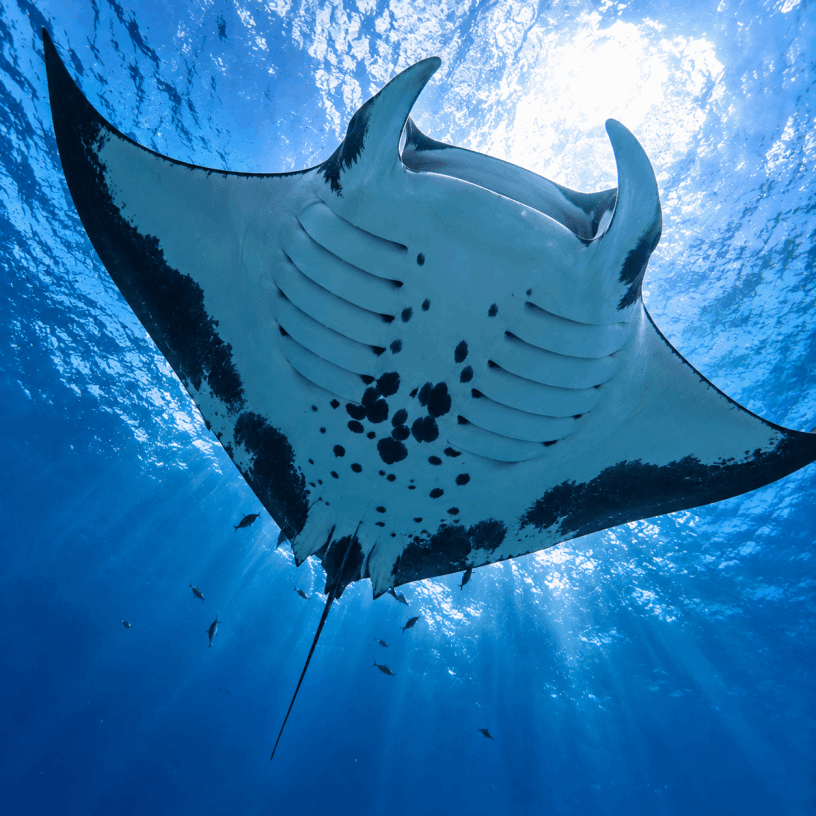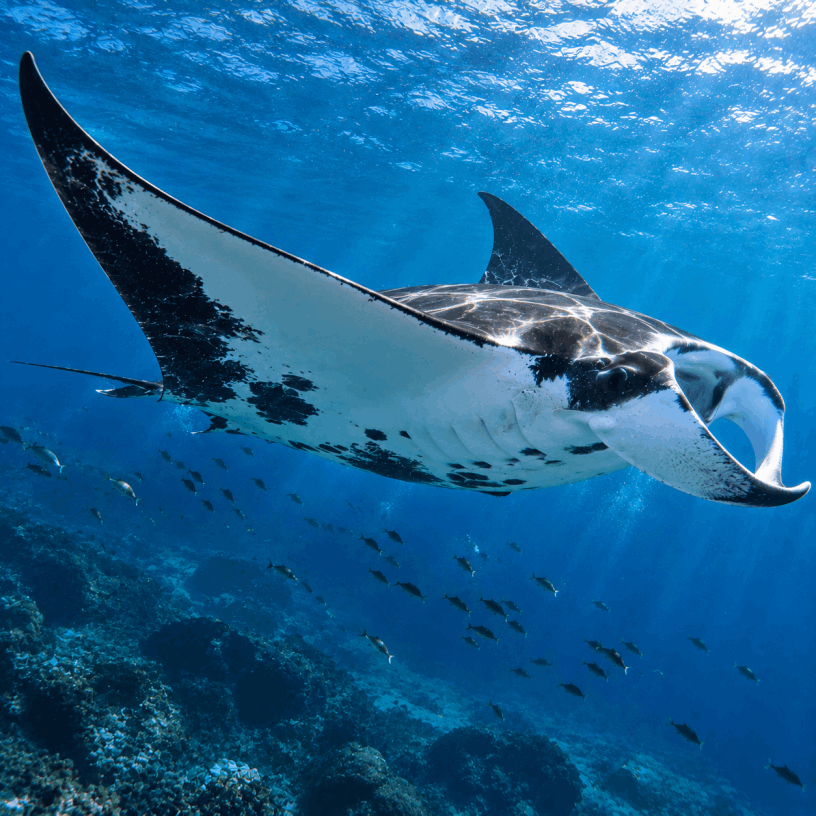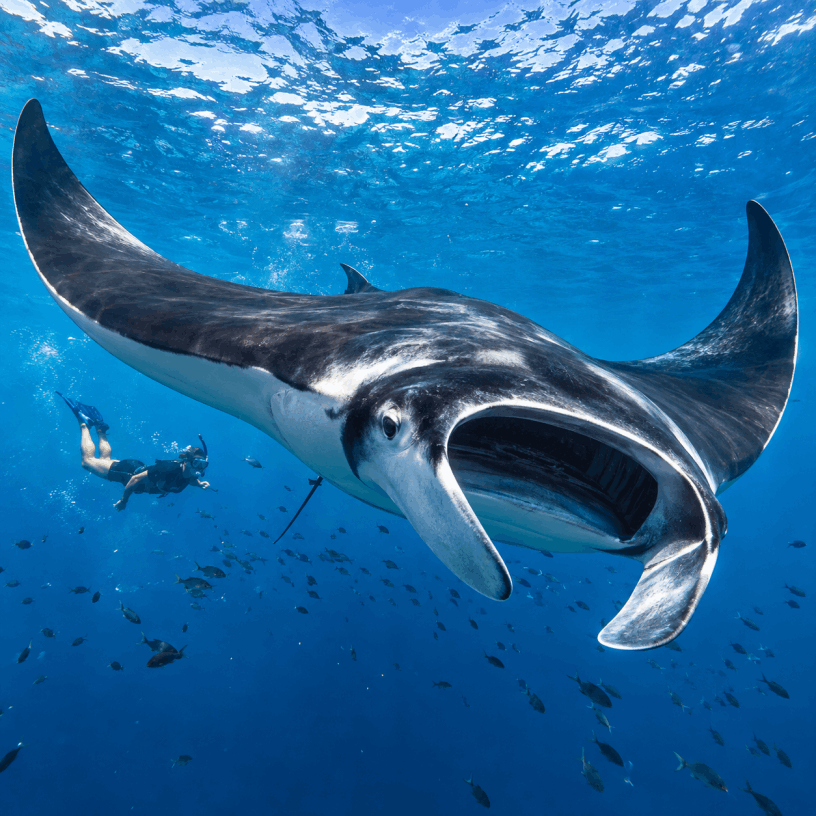
A 29-foot oceanic manta ray has been filmed off San Diego, and the remarkable encounter is giving marine-life enthusiasts another reason to pay attention to the changing waters of the Pacific.
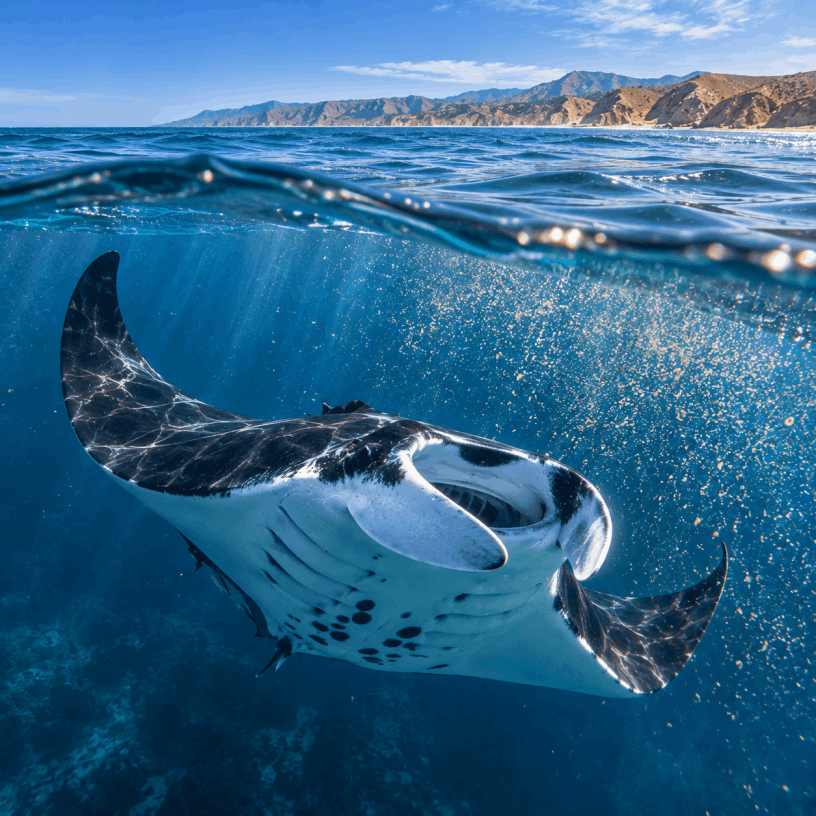
On September 30, 2026, SURFER reported an extraordinary encounter off the coast of San Diego: a massive oceanic manta ray (Mobula birostris) was filmed gliding through the blue water by Net Zero Expeditions.
The animal may have a wingspan approaching 29 feet, making it the largest ray species on Earth. According to the report, the encounter could represent the first documented sighting of an oceanic manta in local San Diego waters.
For anyone who spends time exploring the waters of Baja California, however, the story is more than just a spectacular video.
It is another reminder that the Pacific Ocean is a constantly moving, interconnected ecosystem—and that Baja sits right in the middle of one of the world's most fascinating marine environments.
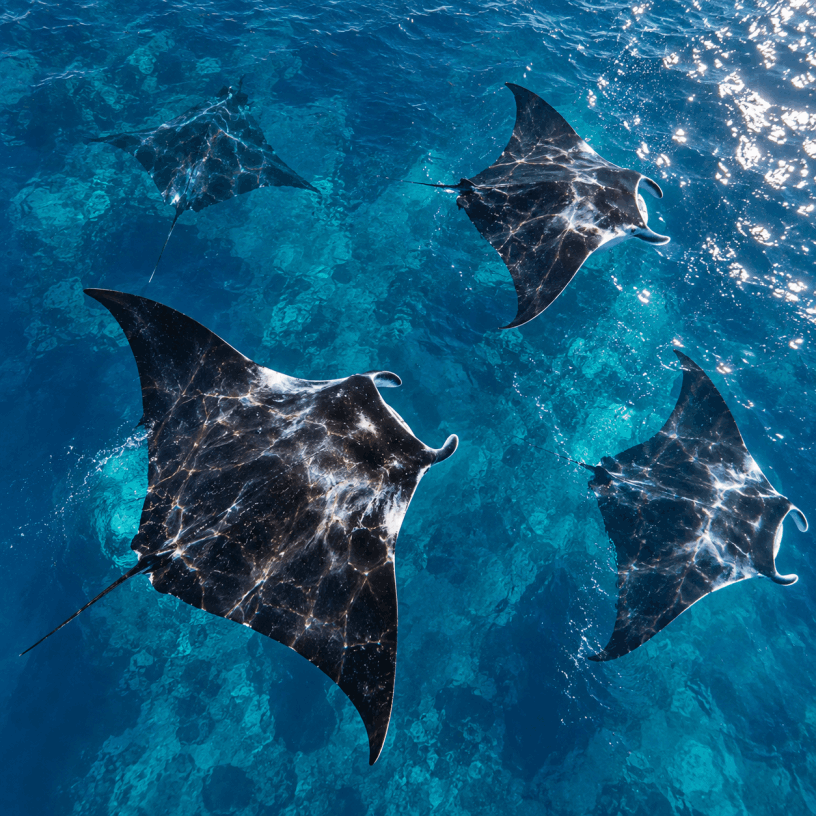
Despite their enormous size, oceanic manta rays are not predators.
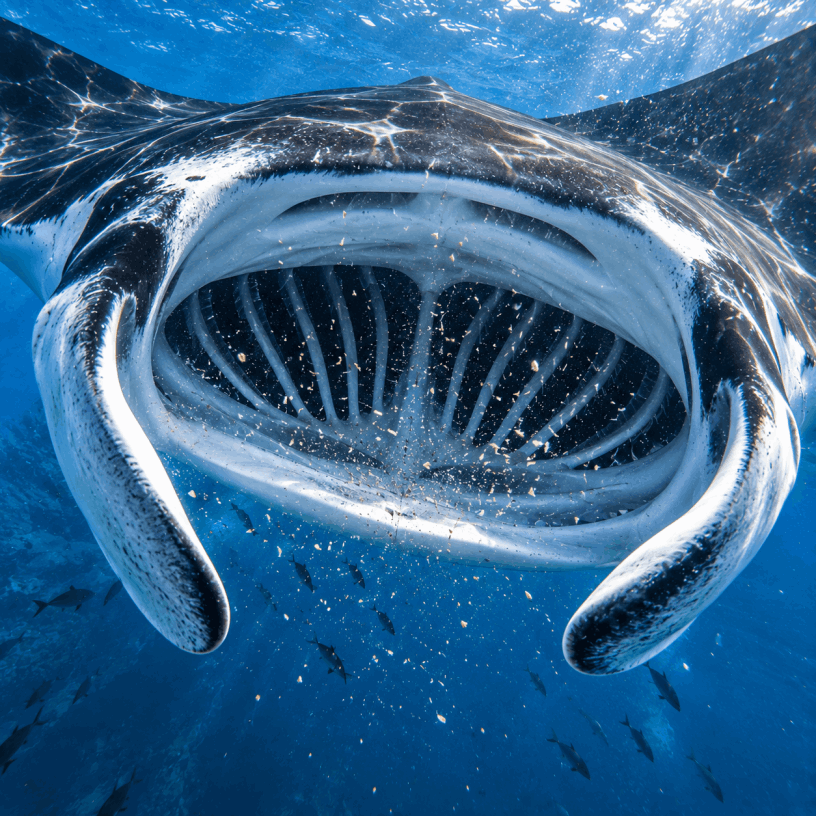
They are filter feeders, swimming through the ocean with their enormous mouths open and filtering plankton and other tiny organisms from the water.
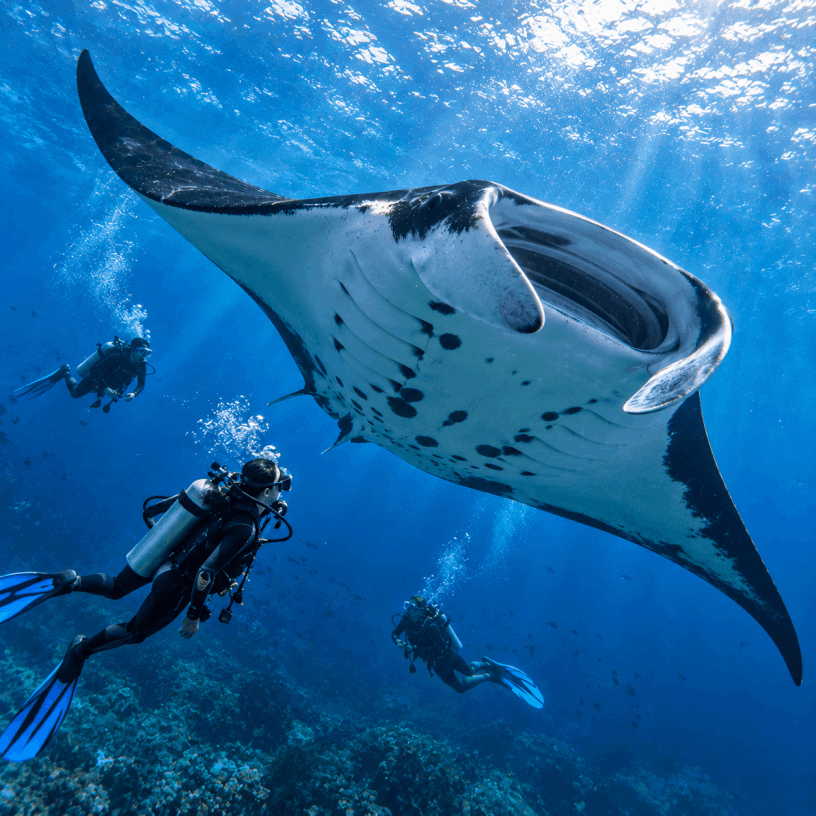
Watching one underwater can be almost surreal. Their enormous pectoral fins move slowly and gracefully, giving the impression that the animal is flying rather than swimming.
And unlike stingrays, manta rays don't have a dangerous venomous barb.
They are generally considered gentle animals, and encounters with divers and snorkelers can be among the most memorable experiences the ocean has to offer.
The oceanic manta is also a species of conservation concern. NOAA identifies Mobula birostris as threatened under the U.S. Endangered Species Act.
This is where the story gets particularly interesting.
According to SURFER, Southern California has been experiencing unusually warm ocean conditions, with El Niño conditions strengthening and a marine heatwave already affecting the region.
Warmer water can influence where marine animals travel. Mantas are highly migratory, and their movements can be influenced by water temperature, ocean currents and concentrations of zooplankton—the microscopic food source that helps support entire marine food webs.
The manta wasn't the only unusual visitor.
Earlier in September, approximately a dozen spinetail devil rays were reportedly observed near San Diego's Nine Mile Bank, another warm-water species that is more commonly associated with waters farther south.
These sightings demonstrate something ocean explorers have known for generations:
The animals don't care about political borders or state lines.
The Pacific Ocean is one enormous connected system.
Farther south, the waters surrounding Baja California and the Sea of Cortez are famous for extraordinary concentrations of marine life.
The Baja peninsula sits where different oceanographic environments come together, creating conditions that support whales, dolphins, sea lions, sea turtles, mobula rays, manta rays, whale sharks and countless species of fish and seabirds.
For Baja Charters, this is one of the reasons we never think of a day on the water as simply a boat trip.
Every trip is an opportunity to see what is happening in the ocean.
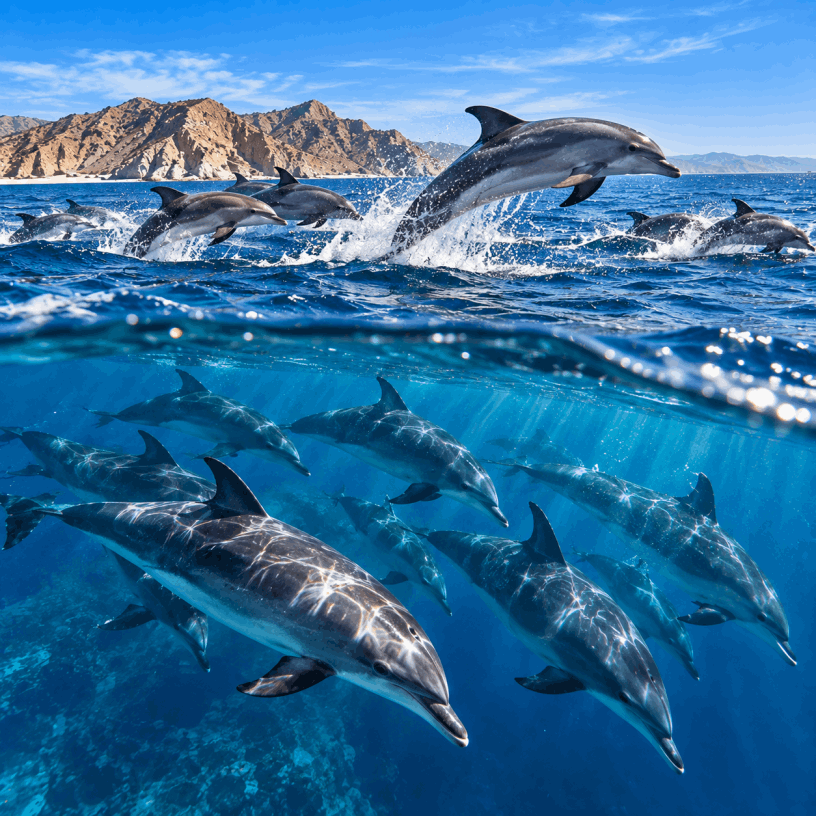
One day you might encounter a pod of dolphins.
Another day, a sea lion colony.
During the right season, you might find yourself looking into the enormous mouth of a whale shark while it feeds on plankton.
And sometimes, the ocean produces something completely unexpected.
The San Diego sighting is particularly fascinating because oceanic manta rays are much more commonly associated with warmer tropical and subtropical waters.
That makes Baja an important part of the story.
The eastern Pacific stretches from the waters of Southern California down along Baja and into the tropical Pacific. Marine animals can travel enormous distances through this connected environment, following food, temperature and currents.
So when an enormous manta appears hundreds of miles farther north than expected, it gives scientists and ocean observers another piece of information about what is happening beneath the surface.
As SURFER reported, Net Zero Expeditions describes its trips as opportunities to observe and document changes in the marine environment.
That idea is important.
Every encounter is a piece of the puzzle.
One of the extraordinary things about exploring Baja is that you don't have to travel to some remote corner of the world to experience remarkable marine life.
It's right here.
The waters around the Baja California Peninsula are home to an incredible variety of species, including several species of rays and whales, sea turtles, dolphins, sea lions and some of the world's largest fish.
And the farther you explore, the more you realize how interconnected everything is.
A plankton bloom can attract enormous numbers of small fish.
Those fish attract larger predators.
Migrating whales follow food sources.
Whale sharks follow plankton concentrations.
Mobula rays gather where feeding conditions are favorable.
And enormous manta rays can travel great distances through the same ocean system.
The ocean is constantly moving—and so is the life within it.
Nobody can look at one manta sighting and say exactly what it means for the future.
But unusual marine-life sightings are worth documenting.
Ocean temperatures, currents, plankton concentrations and seasonal conditions all influence where animals appear. Researchers and experienced people on the water can sometimes observe changes long before those changes become obvious from shore.
That makes encounters like the San Diego manta sighting exciting not only because of the animal itself, but because of what it encourages us to do:
Pay attention.
Look beneath the surface.
Record what we see.
Respect the animals.
And protect the ocean that connects us all.
At Baja Charters, we're fortunate to operate in one of the most biologically fascinating marine environments on the planet.
Whether you're searching for whale sharks, swimming with sea lions, exploring the islands, watching dolphins or simply cruising through the spectacular waters of the Sea of Cortez, you never really know what the ocean is going to put in front of you.
And that's part of the magic.
Because somewhere beneath the surface, the next extraordinary encounter is already happening.
Keep watching the water.
You never know what you'll find.
Source: The original report on the San Diego oceanic manta sighting was published by SURFER on September 30, 2026.
Follow Us